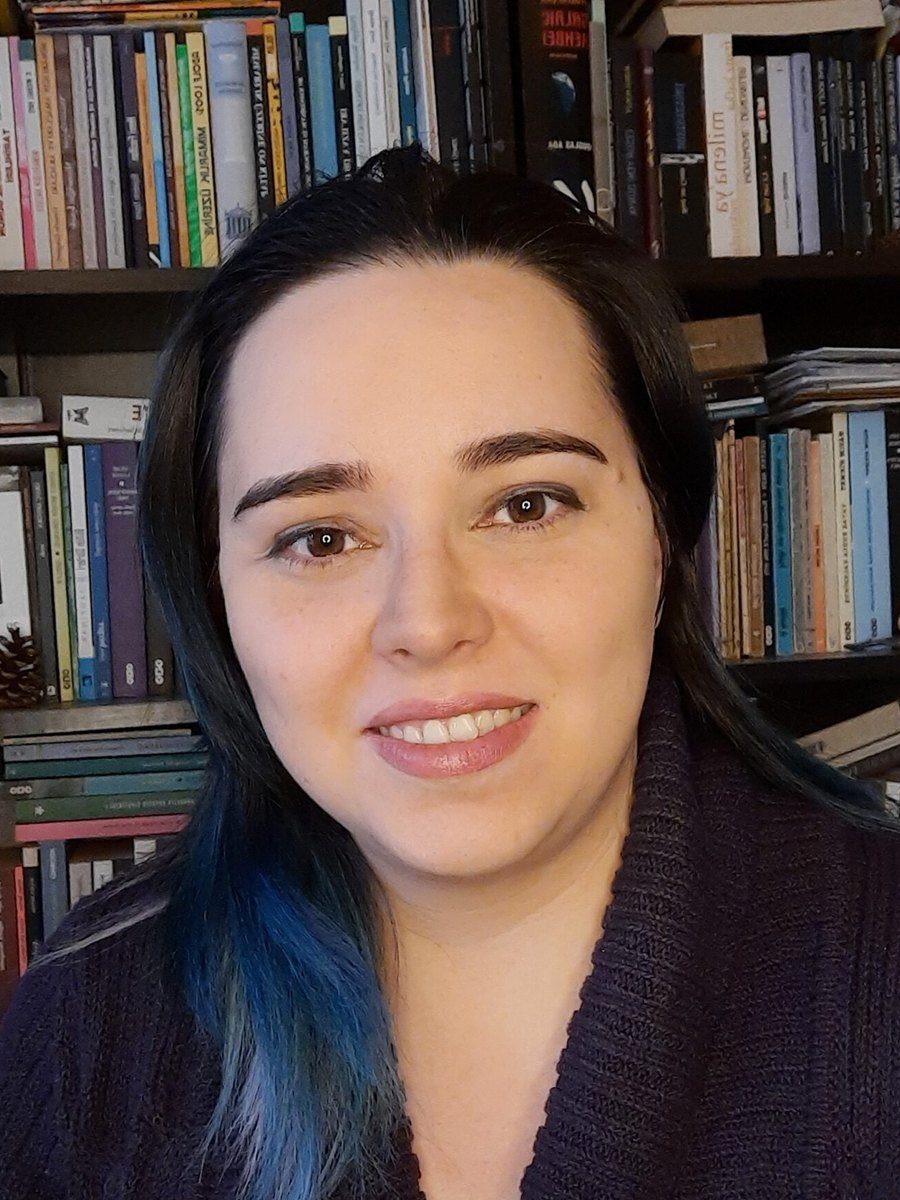
She lived with maladaptive daydreaming for years in her youth, before the problem even had a name; she turned to psychology during her education and overcame her difficulty through her own efforts. Today she is a psychologist and artist working with creativity, with ongoing projects in the visual arts, theatre and cinema.
In my middle-school years, when I realised that my imagination had begun to sabotage my life, I was completely alone in dealing with it. The professionals I asked for help either could not grasp that this was a problem, or had no solution to offer me. With a little luck, and a little of the problem-solving determination that we maladaptive daydreamers only rarely catch hold of, I turned to studying psychology to find the answers to my questions myself.
In the spring of 2020, when I first noticed the support communities that had formed on their own, the memories of that dark period came back. I remembered how much I had longed for the relief felt by those who joined the groups saying “At last I know the name of my problem!”; in those searching desperately for answers, I saw my own youth. And with an indescribably vast sense of hope and responsibility, I realised that from now on, no one may have to walk the dark road I walked, alone and without help!
We still have a way to go, but we can see that road. I sincerely thank all the academics who are pressing ahead with their research, Eliezer Somer above all, and Jayne Bigelsen, who has put her effort into bringing this problem, overlooked for generations, to light.
To days when our dreams and our reality alike overflow with hope, with love,
Çağla Altıntaş
Dear Reader,
When we laid the foundations of Özgür Düş in 2020, we too, like everyone else, were caught up in the mood of the crisis the world was going through. We were concerned with the side of creativity that had become an illness, and we acted purely out of a wish to serve people.
The years since then offer a chance to approach the subject from a new perspective. As an artist who has passed through many stages of the experiences we group under MD, and who can now present this creativity in legitimate fields of art, my belief and hope regarding recovery from MD and its integration into life are stronger than ever. Now and then I explain this change by saying, “I followed the advice I gave to young people.” It has a nice ring to it; and of course it is a very surface-level account of the truth. I had to produce, I had to see what I produced, I had to synthesise, I had to give birth.
Psychology is still a young science, and it has only just begun, so to speak, to meet creativity. We are in the middle of an inner dialogue that will stretch over years and decades: What is this Creativity? What is this power in our hands, and what does it make us do?
With this vision, the Özgür Düş Platform reaches beyond a collection of information: we move with the hope of being a place where creativity is studied, practised, celebrated and tamed.
With love,
Çağla Altıntaş
Path
2012Graduated in Psychology from Ege University.
ThenPsychologist at a care centre, psychological counsellor at an education centre for people with hearing impairments, volunteer counsellor at the Altı Nokta Association of the Blind, counsellor for bedridden patients.
2020Noticed the support communities and founded Özgür Düş.
2022Began to give art a large place in her life as a painter.
2027The DayDream Diary app (called Özgür Düş in Turkey).